
City of Campbellsville
Stormwater Management
Stormwater & Our Community
Stormwater management plays an important role in protecting Campbellsville’s streams, creeks, and waterways. By managing runoff and preventing pollution before it reaches the storm drain system, the City helps safeguard environmental health, public safety, and water quality for future generations.
An informed and engaged community is essential to the success of this effort.
Contact
Bobby Sexton
Supervisor
Address:
109 W. Main Street
Campbellsville, KY 42718
Phone: (270) 465-7011
Fax: (270) 789-0251
Public Education & Awareness
Helping Protect Our Water Starts at Home
Education is one of the most effective tools for improving stormwater quality. Small, everyday actions can make a meaningful difference.
Seasonal Focus: Pet Waste
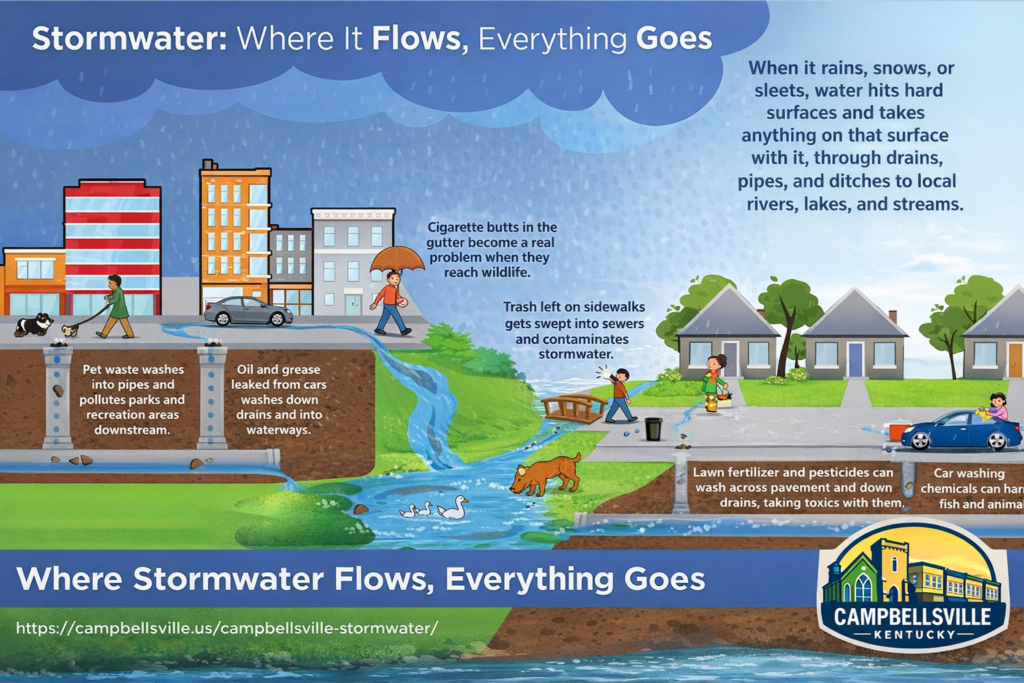
Pet waste may seem minor, but when left on the ground it can wash into storm drains and local waterways during rainfall. This contributes to water pollution and environmental impairment.
How you can help:
Always clean up after pets
Dispose of pet waste in proper trash containers
Never leave waste near storm drains or waterways
These simple steps go a long way toward keeping Campbellsville’s water clean.
Stormwater Permits
Construction & Land Disturbance Permits
Under the Clean Water Act, the City of Campbellsville’s MS4 program requires a stormwater permit for most ground-disturbing activities.
If your project involves soil disturbance, grading, or construction, a permit may be required. Please review the options below to determine the appropriate permit for your project.
Permit Downloads:
More Than One Acre Construction Permit
Download the permit for projects disturbing more than one acre of land.Less Than One Acre Construction Permit
Download the permit for smaller construction or disturbance projects.
If you are unsure which permit applies, City staff can assist you.
Illicit Discharge Education
What Is an Illicit Discharge?
An illicit discharge is any discharge to the stormwater system that is not made up entirely of stormwater, with limited exceptions such as firefighting activities or permitted industrial discharges.
Stormwater systems are designed to carry rainwater only — not wastewater, chemicals, or pollutants.
Common Sources of Illicit Discharges
Illicit discharges can come from many everyday activities, including:
Sanitary wastewater or septic system leaks
Car wash wastewater
Improper oil or automotive fluid disposal
Radiator flushing or vehicle maintenance runoff
Laundry wastewater
Roadway accident spills
Improper disposal of household chemicals or toxins
These pollutants can enter the system through direct connections or indirect infiltration and flow untreated into local waterways.
Why Illicit Discharges Matter
Illicit discharges introduce pollutants such as:
Oil and grease
Heavy metals
Bacteria and viruses
Solvents and chemicals
Nutrients and toxins
Studies have shown these pollutants can significantly degrade water quality and pose risks to aquatic life, wildlife, and public health.
Allowable (Non-Illicit) Discharges
Not all non-stormwater flows are considered illicit. Common allowable discharges include:
Landscape irrigation and lawn watering
Water line flushing
Dechlorinated swimming pool water
Air conditioning condensation
Foundation and footing drains
Springs and uncontaminated groundwater
Individual residential car washing